SENGA NENGUDI
(b. 1943, Chicago, IL; lives and works in Colorado Springs, CO)
Senga Nengudi is a pioneering artist whose interdisciplinary practice bridges sculpture and performance, making significant contributions to postminimalism. Best known for her R.S.V.P. series using nylon stockings, her work explores the body, resilience, and social tensions around gender and identity. Influenced by Fluxus, free jazz, and global traditions, she creates interactive, poetic forms that engage viewers physically and emotionally. Nengudi has presented work in museums worldwide and remains a vital figure in contemporary art, with pieces held in major institutional collections and widely exhibited internationally.
Children’s Art Carnival affiliation: Teaching Artist, 1971–74

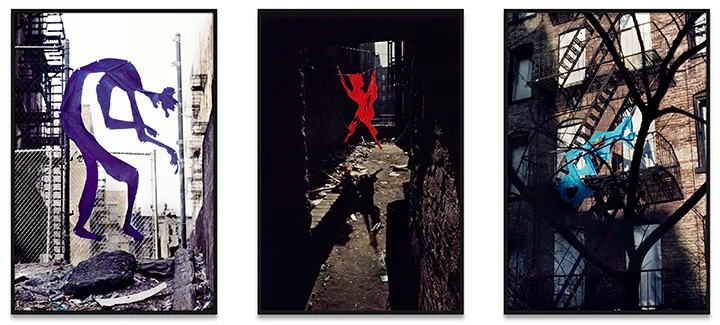
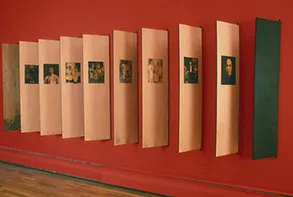
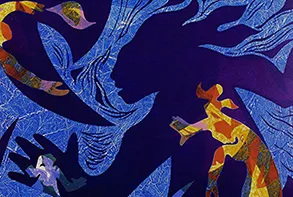
Down (Purple), Red Devil (soul 2), Drifting Leaves, 1972
Printed 2026
Cibachrome print on aluminum, triptych
Each 40 ⅞ × 27 ½ in.
Courtesy of the artist and Sprüth Magers and Thomas Erben Gallery
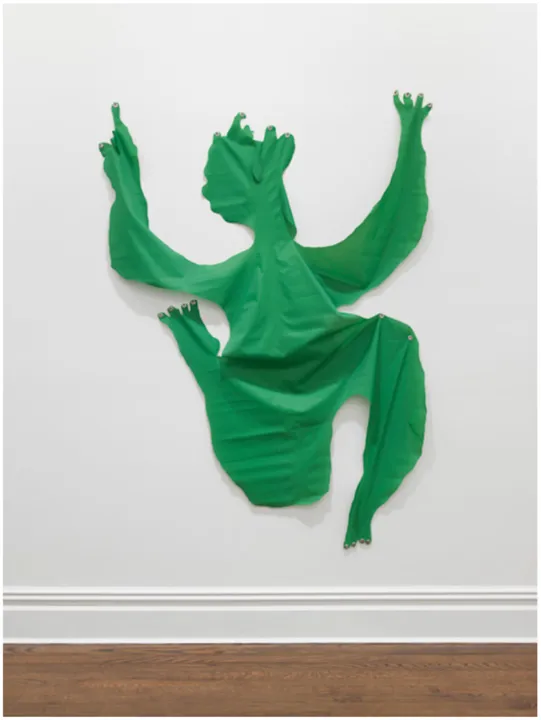
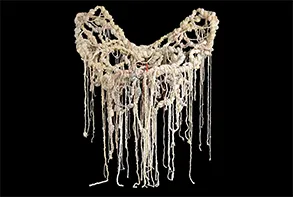
Holler, 1973/2023, edition 1 of 2
Nylon
79 × 55 in.
Courtesy of the artist and Sprüth Magers and Thomas Erben Gallery
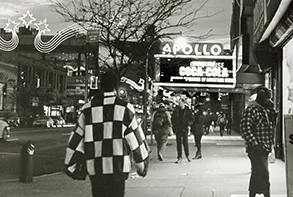
During Senga Nengudi’s years living in East Harlem from 1971 to 1974, her artistic practice was shaped by both the Carnival’s student population and her observations while traveling through Harlem.
Most striking were the hunched, swaying bodies of people living on the street. Moved by this, Nengudi created her Spirit Flags series to depict “...the inner souls or spirits of people I have seen on the city streets; particularly in Harlem.” Using flag material and radiant colors, she created irregularly shaped sculptural forms whose “spirits” are animated by moving air. In accompanying photographs, Nengudi staged these spirits throughout Harlem in contrast with dark shadows and the hard surfaces of brick and concrete.
Nengudi’s blurring of distinctions between folk art, craft, sculpture, and photography draws on her Carnival experience with students who boldly imagined and experimented in their creative process. As she explained, “I've always enjoyed working with kids because they always take it to the next level…they just plow through all the barriers, just like folk art actually…”
This body of work later informed her famed R.S.V.P. series, in which she transformed nylon stockings into similarly amorphous forms.