ELISABETH KLEY
(b. 1956, New York, NY; lives and works in New York, NY)
Elisabeth Kley is known for her black and white ceramic sculptures, vessels, drawings, and site-specific paintings inspired by modernist theater sets and costume designs. Her ceramics, paintings, and works on paper borrow geometric and plant motifs from a wide range of sources, including the Wiener Werkstätte, Sergei Diaghilev’s Ballet Russes, and ancient Egyptian designs.
Kley’s solo exhibitions of ceramics, watercolors, drawings, and prints have taken place in the John Tevis Gallery in Paris, the Georgian National Gallery in Tbilisi, Georgia, Le Petit Versailles in New York, and several other galleries in New York and around the world. She has also participated in many group exhibitions and was awarded a Pollock-Krasner Foundation grant.
Children’s Art Carnival affiliation: Teaching Artist, Late 1980s–Early 1990s

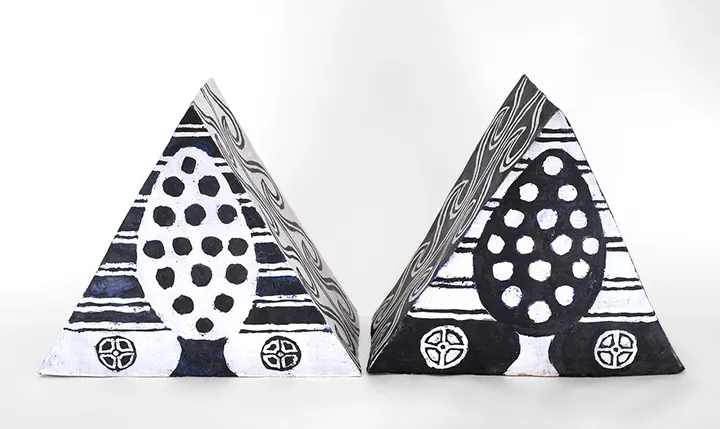
Mountains with Trees, 2020
Glazed earthenware
Each 17 × 10 × 10 in.
Courtesy of the artist and CANADA, New York
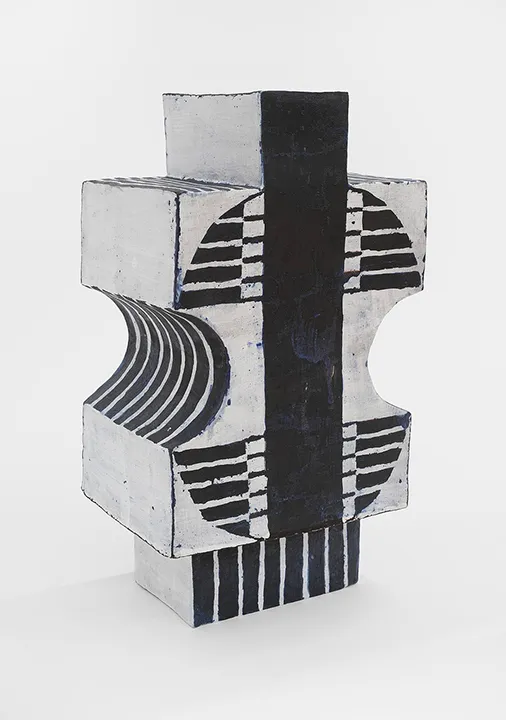
Vessel Interrupted by Emptiness, 2023
Glazed earthenware
26 ½ × 14 × 10 ½ in.
Courtesy of the artist and CANADA, New York
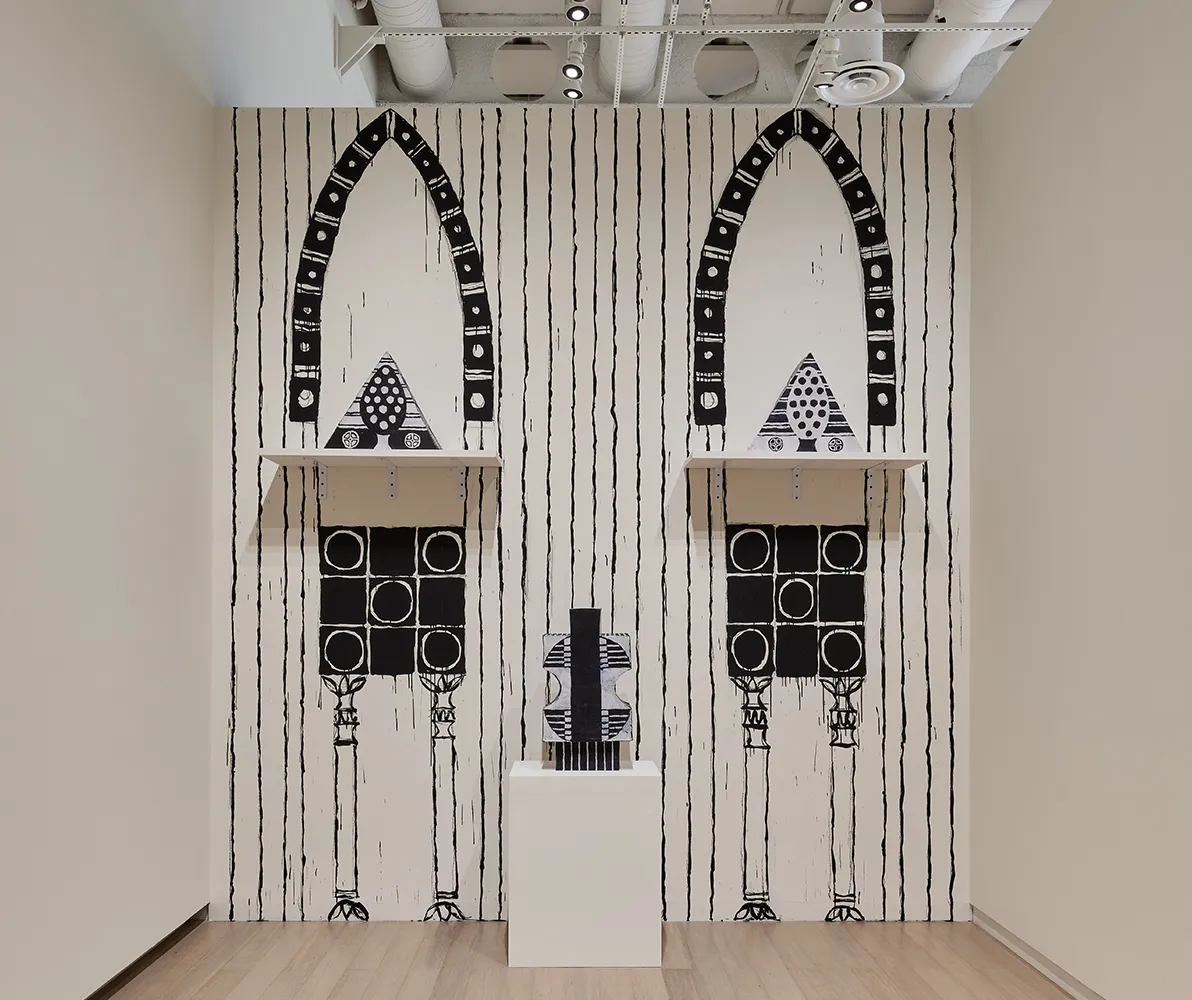
Wall Painting for Children's Art Carnival, 2026
Charcoal and Flashe wall painting with glazed earthenware
Dimensions variable
Courtesy of the artist and CANADA, New York
Like most of the Carnival's teaching artists, Elisabeth Kley taught a range of projects, from puppetry to printmaking. It was the latter that resonated most deeply with her own artistic practice and introduced her to a new artmaking process. The project involved teaching the children to make prints using Styrofoam meat trays—an example of the Carnival’s inventive use of everyday materials. “I actually started making Christmas cards out of that same way,” she said. “And then I made more elaborate prints…that definitely stuck with me the most.”
After her years at the Carnival, Kley made prints using the techniques she learned there. Those prints featured decorative patterns similar to the ones in this installation. This immersive, heavily geometric environment—composed of a mural and ceramic sculptures—draws from a range of historical sources, including Wiener Werkstätte, Sergei Diaghilev’s Ballet Russes dance company, and ancient Egyptian design. The latter influence is especially apparent in the pyramid-like sculptures on the shelves and the arches framing the works, suggesting the spiritual gravity and architectural grandeur of a temple.
MINI ORAL HISTORY