BEVERLY SEMMES
(b. 1958, Washington, D.C., lives and works in New York, NY)
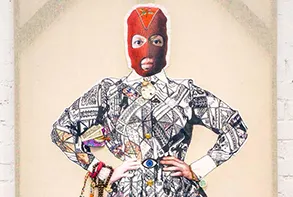
Beverly Semmes is an interdisciplinary artist working across sculpture, painting, drawing, photography, film, performance, and fashion to examine the representation and contradictions of the female body. Based in New York City since 1982, her practice merges materials such as fabric, found objects, and image-based works to explore themes of visibility, concealment, and transformation. Semmes has exhibited internationally, with solo presentations at the Hirshhorn Museum and Sculpture Garden, ICA Philadelphia, MCA Chicago, and Henry Art Gallery. Her work has been featured at the Hammer Museum in Witch Hunt (2022) and Susan Inglett Gallery in New York. She co-founded the CarWash Collective, extending her feminist inquiry through performance and wearable sculpture. Her work is held in major collections including the Whitney Museum of American Art and the Brooklyn Museum.
Children’s Art Carnival affiliation: Teaching Artist, 1989 (one semester)

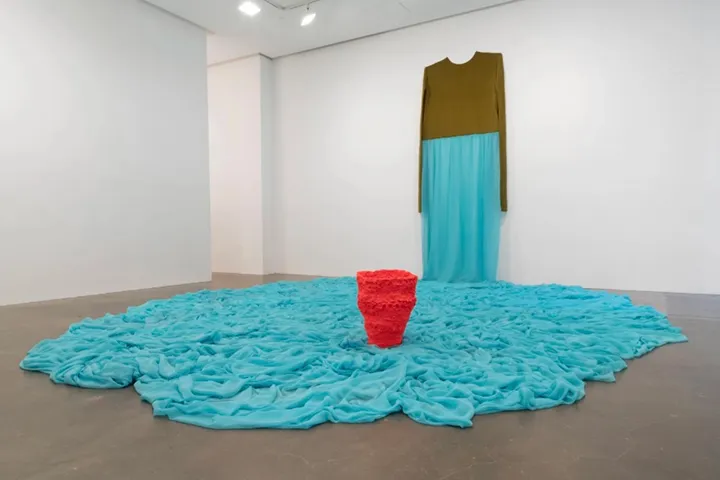
On the Lake, 2022.
Chiffon, wool, ceramic, and paint
Dimensions vary; approx. 134 × 202 × 216 in.
Courtesy of the artist & Susan Inglett Gallery, NYC
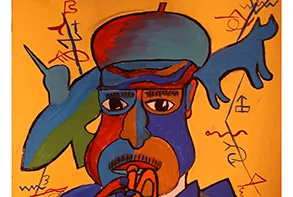
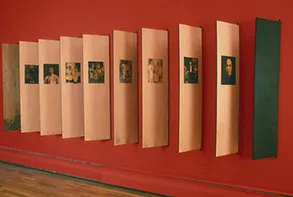
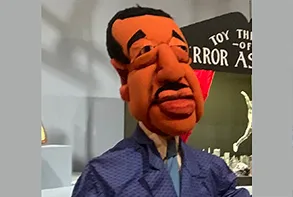
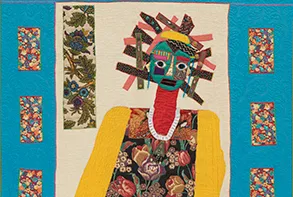
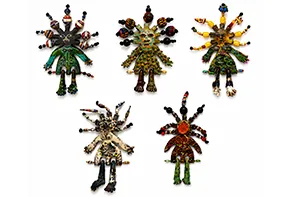
Beverly Semmes’s first teaching job was as an instructor in the Carnival’s in-school program in the Bronx, where she helped students create sculptural portraits based on historical figures.
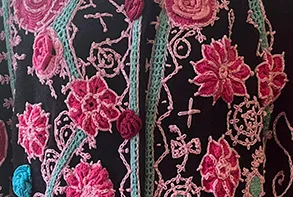
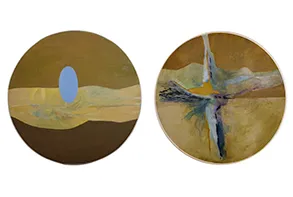
At the time, Semmes was two years out of graduate school with a serious approach to artmaking, focusing on abstraction and a muted color palette. After working for the Carnival, however, her practice became more organic, colorful, and experimental, evidenced by an interdisciplinary body of work notable for vibrantly hued and monumentally scaled representations of the female body and fashion.
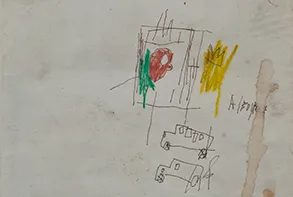
Here, Semmes presents a pool of blue chiffon extending from the bodice of the dress, referencing her interest in water, landscapes, and bodies. Drawing upon her Carnival experience, Semmes imbued the work with the whimsy of a floating ceramic pot recalling as she stated, “a child’s drawing.”
“I loved the way the students used color,” she said. “I loved the looseness that they worked with and I really loved these figures which was definitely the Children’s Art Carnival part of the idea…It was a really serious influence on me.”
MINI ORAL HISTORY