ADEMOLA OLUGEBEFOLA
(b. 1941, Charlotte Amalie, U.S. Virgin Islands; lives and works in Harlem, NY)
Ademola Olugebefola is an educator, activist, and multidisciplinary artist whose work spans painting, printmaking, design, and performance. He became a key figure in Harlem’s cultural scene during the Black Arts Movement and early Afro-Futurist Movement. A founding member of the Weusi Artist Collective and former Educational Director of the Weusi Academy of African Arts and Studies, he also studied at the Robert Blackburn Printmaking Workshop. An elder of the Yoruba Temple, his practice is rooted in African diasporic identity, spirituality, and community activism. His work is held in numerous collections including the Studio Museum in Harlem and Schomburg Center for Research in Black Culture.
Children’s Art Carnival affiliation: Teaching Artist, latter 1970s–1980s

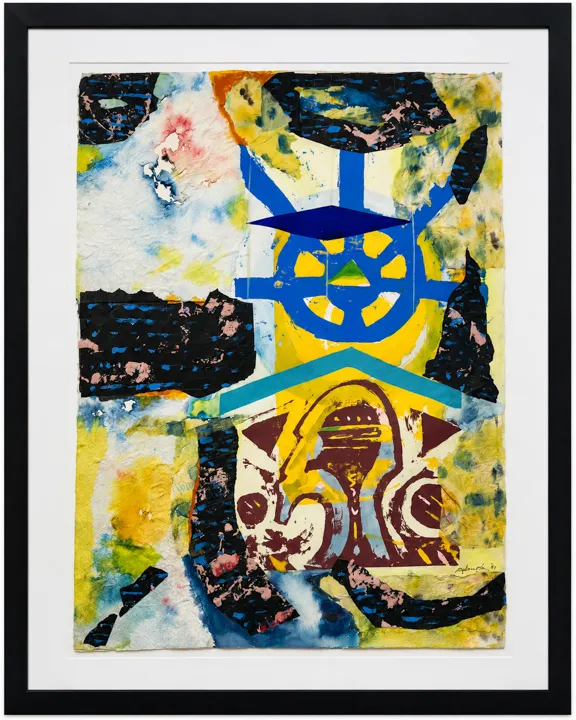
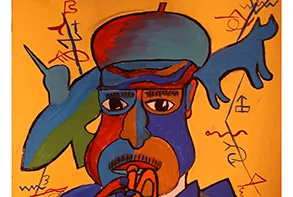
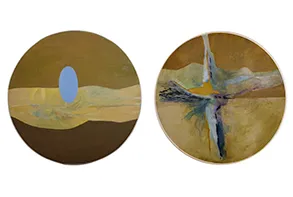
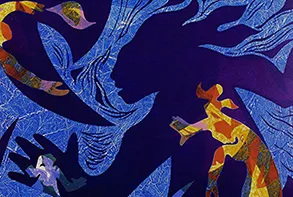
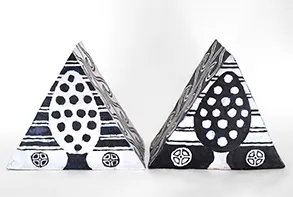
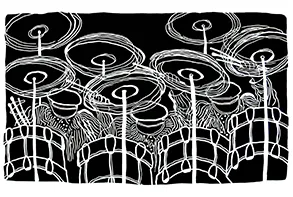
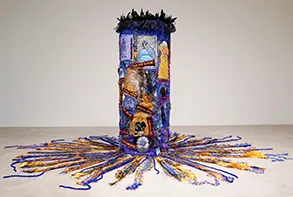
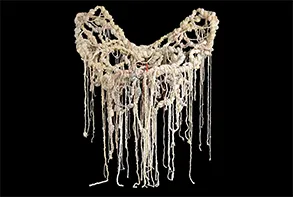
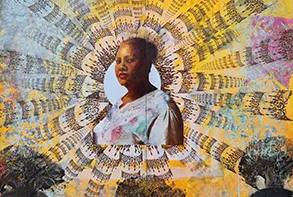
’Round About Midnight: for Thelonious Monk, 1995
Mixed media with limited edition serigraph, luma ink, acrylic paint, and collage on imported handmade paper
30 × 22 in.
Courtesy of the Voza Rivers Collection
For artist and activist Ademola Olugebefola, the Carnival—particularly during the 1970s—embodied the Black Arts Movement’s mission of community empowerment through art and the promotion of Black aesthetics. He was introduced to the Carnival when executive director Betty Blayton-Taylor visited Nyumba Ya Sanaa Gallery (House of Art), the Harlem headquarters for the Weusi Artist Collective, of which he was a founding member and whose members also included fellow teaching artists Dindga McCannon and Emmett Wigglesworth. Impressed by Blayton-Taylor’s vision, Olugebefola soon joined the Carnival as a teaching artist.
“It was important that we kind of charted our own course as a community…” he said. “So it [the Carnival] fed into and was part of the Black Arts Movement, which is about education, community upliftment, and redefining the parameters of what art is itself.”
The Carnival’s experimental environment and creative energy fueled Olugebefola’s artistic practice. After teaching, he often remained there working after hours, developing the foundation for these fine art mixed media works incorporating collage elements—a subject he taught. The works honor legendary jazz musicians and reflect his former career as a jazz bassist and his use of music in the classroom.
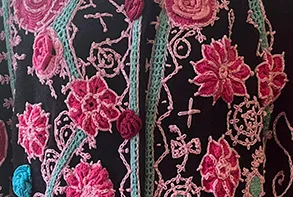
Olugebefola was also instrumental in planning the Carnival’s community murals and designing textiles at its for-profit branch, Harlem Textile Works.
MINI ORAL HISTORY