JEAN-MICHEL BASQUIAT
(b. 1960, Brooklyn, NY; d. 1988, Manhattan, NY)
Jean-Michel Basquiat is one of the best-known artists of his generation and is widely considered to be one of the most important artists of the 20th century. His career in art spanned the late 1970s through the 1980s until his death at the age of 27. Before his career as a painter began, he produced punk-inspired postcards for sale on the street and became known for political-poetical graffiti under the name of SAMO©. Later, Basquiat found prominence within the neo-expressionist movement. His imagery combined text, abstraction, and figuration, and his artworks often included the three-pointed gold crown, his signature motif. As a young black artist, Basquiat leveraged his unique style to address manifestations of racism, classicism, and colonialism in American society.
Children’s Art Carnival affiliation: Teaching Artist Intern, mid-to-late 1970s (approx. one semester)

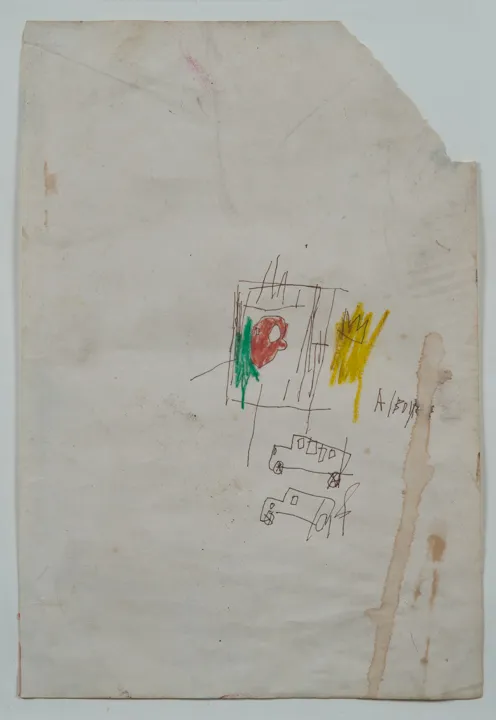
Untitled (two trucks), 1981
Oil stick and mixed media on paper
18 × 12 in.
Private Collection
© Estate of Jean-Michel Basquiat. Licensed by Artestar, New York.
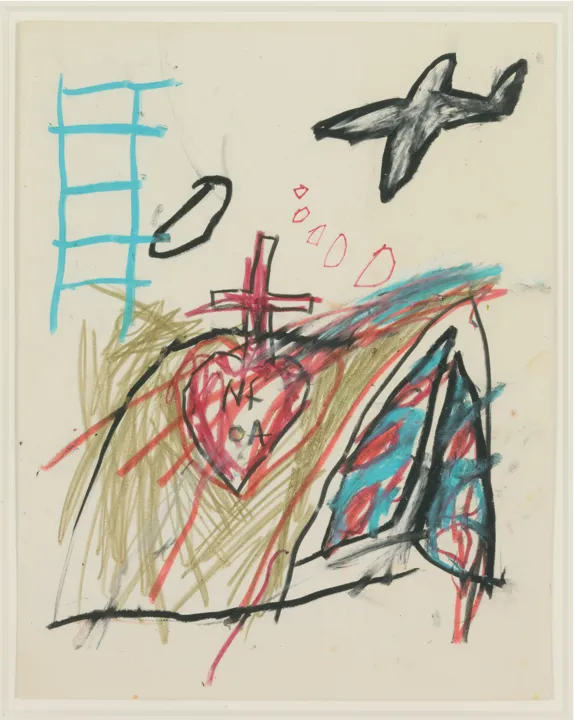
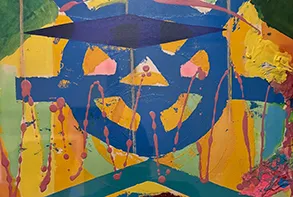
Untitled (heart Henry Geldzahler), 1981
Mixed media on paper
14 × 11 in.
Private Collection
© Estate of Jean-Michel Basquiat. Licensed by Artestar, New York.
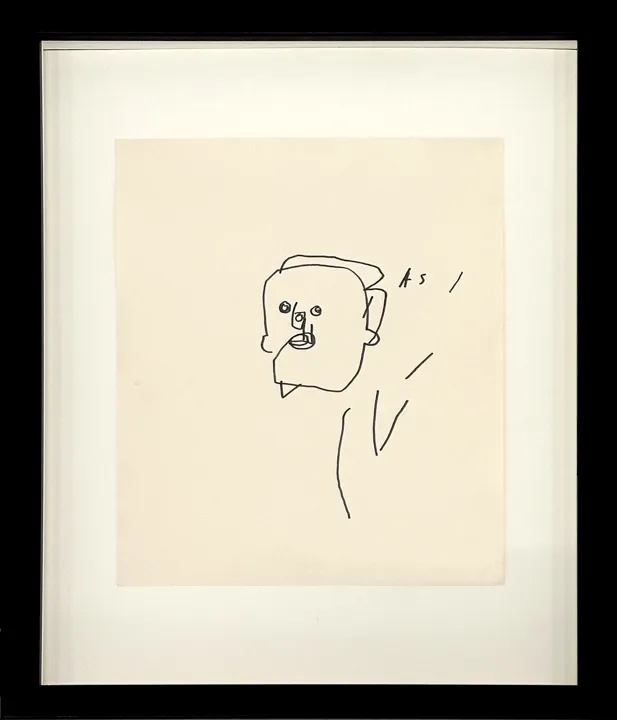
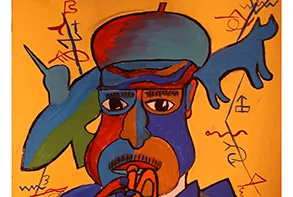
Untitled (Simple Man), 1980
Marker on paper
11 × 8 ½ in.
Private Collection
© Estate of Jean-Michel Basquiat. Licensed by Artestar, New York.
Prior to becoming one of the most revered and celebrated artists in history, Basquiat was an intern at the Carnival. During his mid-teens, Jean-Michel Basquiat along with Armando Alleyne—both students at the alternative high school, City-As-School—interned in Michael A. Cummings’s classroom where they assisted in teaching drawing, collage, and painting to both disabled and non-disabled students.
In between his internship duties, Basquiat was given opportunities at the Carnival to explore his own artistic interests, one of many contributing factors to his evolving aesthetic and emergence on the Downtown art scene. The Carnival’s executive director, Blayton-Taylor, noted, “He was doing silkscreen prints at the Carnival’s print workshop and he would take those downtown and show them to [Andy] Warhol and some of the other characters that were on the scene…They were intrigued with his imagery, a lot of which I think came from working with the young children…it's very much into the childish iconography. So he has taken the children's approach to the image and created a whole new approach to art.”
Created after his brief time at the Carnival, the works on view exemplify some of the influences he may have absorbed there. All three pieces possess the visceral kinetic energy of a child’s drawing, with imprecise lines and shapes, and scribbled handwriting. Untitled (Two Trucks) features Basquiat’s signature crown motif, an emblem with varied meanings such as racial pride, power, and irony. Untitled (heart Henry Geldzahler) is named after the legendary curator and Basquiat supporter. The erratic scrawlings suggest the impulsive nature of children, while the cartoon-like portrait Untitled (Simple Man) draws on children’s sometimes simplified visual language.
Although Basquait’s time at the Carnival was brief, these works attest to the ways in which underrepresented community organizations and grassroots ecosystems have historically helped shape contemporary artists, despite such networks often being marginalized within mainstream art historical narratives.