EMMETT WIGGLESWORTH
(b. 1939, Philadelphia, PA; lives and works in Queens, NY)
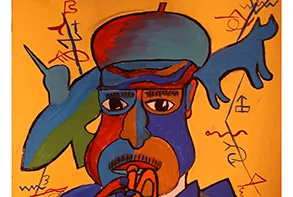
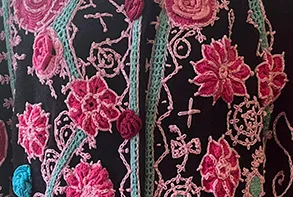
Emmett Wigglesworth is a muralist, painter, sculptor, fabric designer, and poet. Wigglesworth has designed and illustrated several books and magazines for various publishing companies including Harper & Row, McGraw Hill, Macmillan Press, American Books, and Sesame Street Magazine. He taught art at the New Muse in Brooklyn, the J.O.I.N. Center, the Children's Art Carnival and the Harlem Parents Association in Manhattan. He was also an instructor for a number of special programs for the Board of Education, where he taught academics through art. His work has been exhibited in Ghana and throughout the U.S. and his mural commissions include: P.S. 181 in Brooklyn, the New York Cultural Council, Metropolitan Transit Authority, Kings County Hospital, Abyssinian Development Corporation and the Brooklyn Children's Center. Wigglesworth is a member of the National Conference of Artists, the Weusi Artist Collective, Association of Caribbean and American Artists, AAA Artists and Cross Sections, as well as the Fulton Art Fair Artists.
Children’s Art Carnival affiliation: Teaching Artist, circa 1972–2005

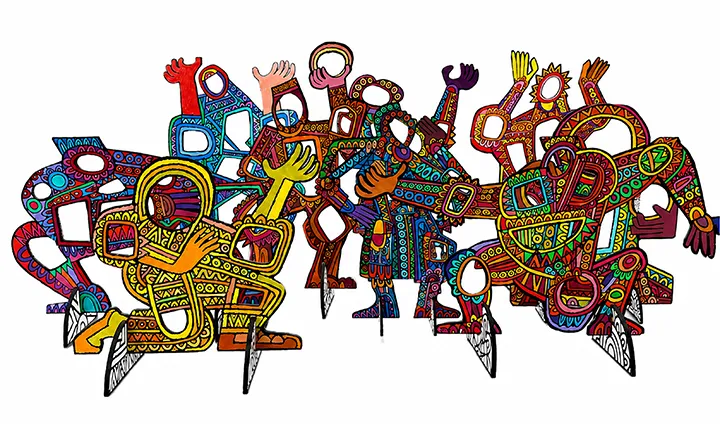
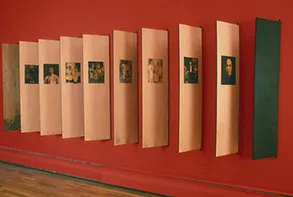
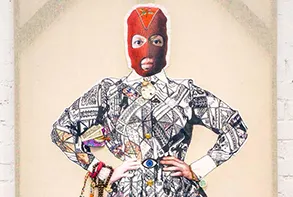
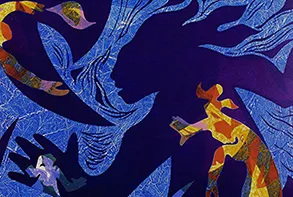
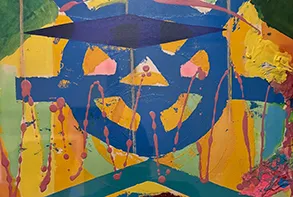
It Is Not Enough to See, One Must See Through to Find Truth, 2013.
Acrylic on styrofoam board
Dimensions vary; each of nine components approx. 72 × 48 × 2 in.
Courtesy of the artist
At the heart of the Carnival’s mission was an unwavering belief in art’s power to uplift humanity, especially children. Emmett Wigglesworth, known to his students and fellow teachers at the Carnival as Brother Emmett, was among the many Carnival teachers who shared these convictions and whose spiritual and artistic commitment deepened with experience.
For Wigglesworth, the Carnival offered a chance to see the world through the eyes of children, whom he believed possessed a natural intuition and an ability to perceive truth. In this installation, life-size figures intertwine and reach toward one another. Face-shaped openings encourage us to see through one another's eyes and recognize our shared humanity.
As Wigglesworth reflected, “If you’ve selected the role of being a messenger…it requires that you put additional effort into trying to understand it and getting it right. If you don't get it right then the spiritual force finds someone else and that goes on for eternity.”
Wigglesworth first created small versions of these sculptures before a residency at Jamaica Center for Arts and Learning (JCAL) enabled him to expand them monumentally. The “scribbles” that define the work combine influences from African visual traditions, including the geometric motifs of Kuba textiles and Malian mud cloth, alongside the saturated palettes of Ndebele murals and Kente cloth. Undergirding the work is a profound spirituality, shared by many Carnival teachers, including executive director Betty Blayton-Taylor.
MINI ORAL HISTORY