JANET OLIVIA HENRY
(b. 1947, Harlem, NY; lives and works in Jamaica, Queens)
Janet Olivia Henry is an artist and educator. In partnership with filmmaker Linda Goode Bryant, Henry designed and produced Black Currant, a magazine highlighting the experimental work of artists showcased at Just Above Midtown (JAM) (1982–83). She was a member of the Women’s Action Coalition (WAC), a feminist open alliance that sought to address issues of women’s rights through direct action. Henry is a life-long educator and has worked at the New York State Council on the Arts, the Studio Museum in Harlem’s education department, the Jamaica Center for Arts and Learning, the Lower Eastside Girls Club, the Children’s Art Carnival, and the Brooklyn Heights Montessori School. Henry’s work is held in the collections of The Museum of Modern Art and the Whitney Museum of American Art, New York, The Dorsky Museum at the State University of New York, New Paltz, New York, and the Hammer Museum, Los Angeles.
Children’s Art Carnival affiliation: Teaching Artist, circa 1969–1972

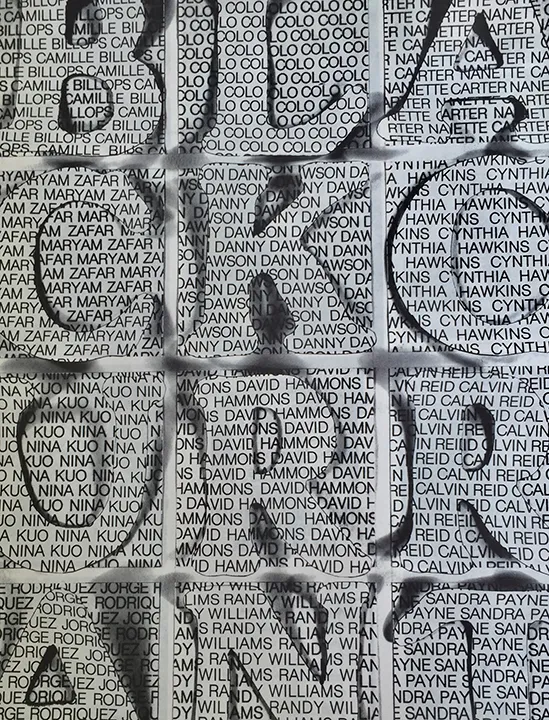
Black Currant, 1982
Offset print booklet, stapled
14 ¼ × 11 in.
Courtesy of the artist and Gordon Robichaux, New York and STARS, Los Angeles
In 1964, at the age of seventeen, Janet Olivia Henry met Carnival executive director Betty Blayton-Taylor when she enrolled in HARYOU (Harlem Youth Opportunities Unlimited), an anti-poverty organization. Blayton-Taylor was one of her instructors and became a mentor.
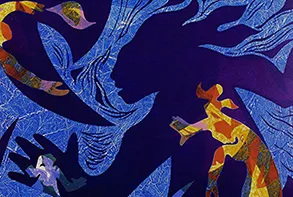
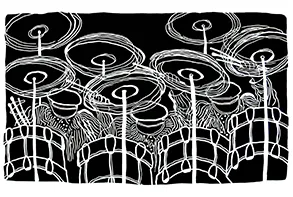
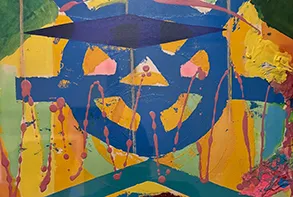
A few years later, when the Carnival opened, Blayton-Taylor hired Henry as a teaching artist. While there, artist Louis Lo Monaco donated a printing press to support the Carnival’s curriculum. Given that only a few staff members were trained in printmaking, Blayton-Taylor paid for Henry’s etching classes at the Art Students League. Henry made Untitled while employed at the Carnival.
The Carnival's investment in Henry’s art education was a supportive and generous act that underscores how the organization helped nurture the talents of emerging artists. For Henry, being surrounded by other artists at the Carnival was another source of motivation. She noted that “...it solidified my attitude about being an artist: I didn't question the fact I could be one. That was a given between Betty and all the other artists I was seeing, and meeting, and working with…”
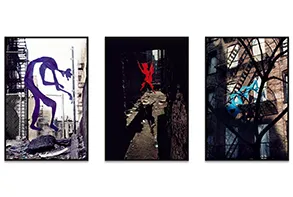
Henry attributes her ability to continue artmaking in large part to the universe of possibilities the Carnival opened up to her. She became active with the legendary art gallery, Just Above Midtown (JAM). Led by Linda Goode Bryant, JAM, (1974 to 1986), showcased cutting-edge work by Black and diverse artists. On display is the JAM magazine, Black Currant (1982–83), which Henry designed and helped develop.
MINI ORAL HISTORY