Korakrit Arunanondchai: What is an Image, 2570
What is an Image?
An image makes something visible, giving sight to what was once there. But some images do more than show. You have looked at a photograph and felt the presence of someone no longer there—a lover, a distant memory, a version of yourself you no longer recognize. Something in the image exceeds what language can hold, a coherence in the body before the mind has found its words. It arrives as pattern, holding things together not by category but by affect. But what causes the affect? What lives in the image that we cannot see?
What is an Image, 2570 brings together a selection of works by contemporary Thai artist and Columbia University alumnus Korakrit Arunanondchai (b. 1986). Based between Bangkok and New York, Arunanondchai works across moving image, painting, sculpture, installation, performance, music, and ritual. He approaches art as a form of storytelling: a way of carrying memories, histories, bodies, images, and emotions across time.
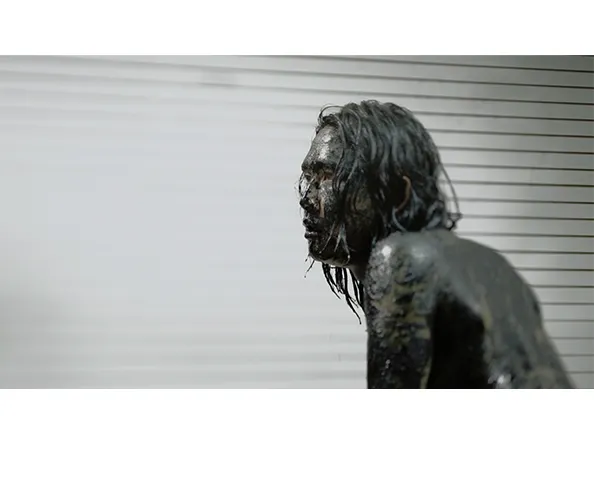
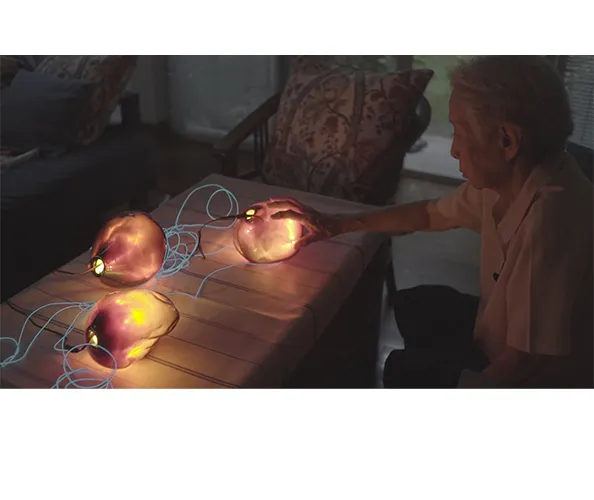
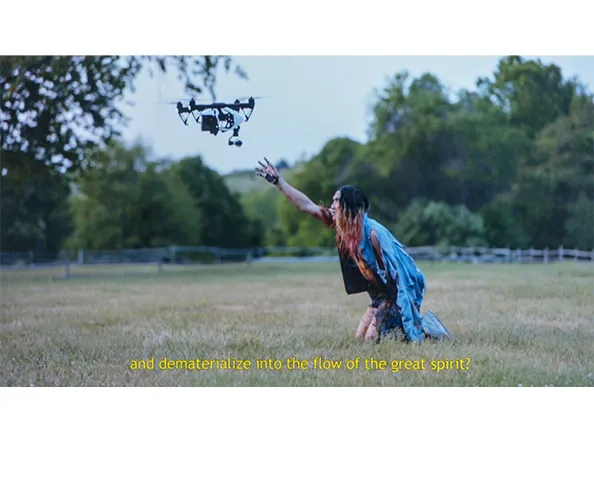
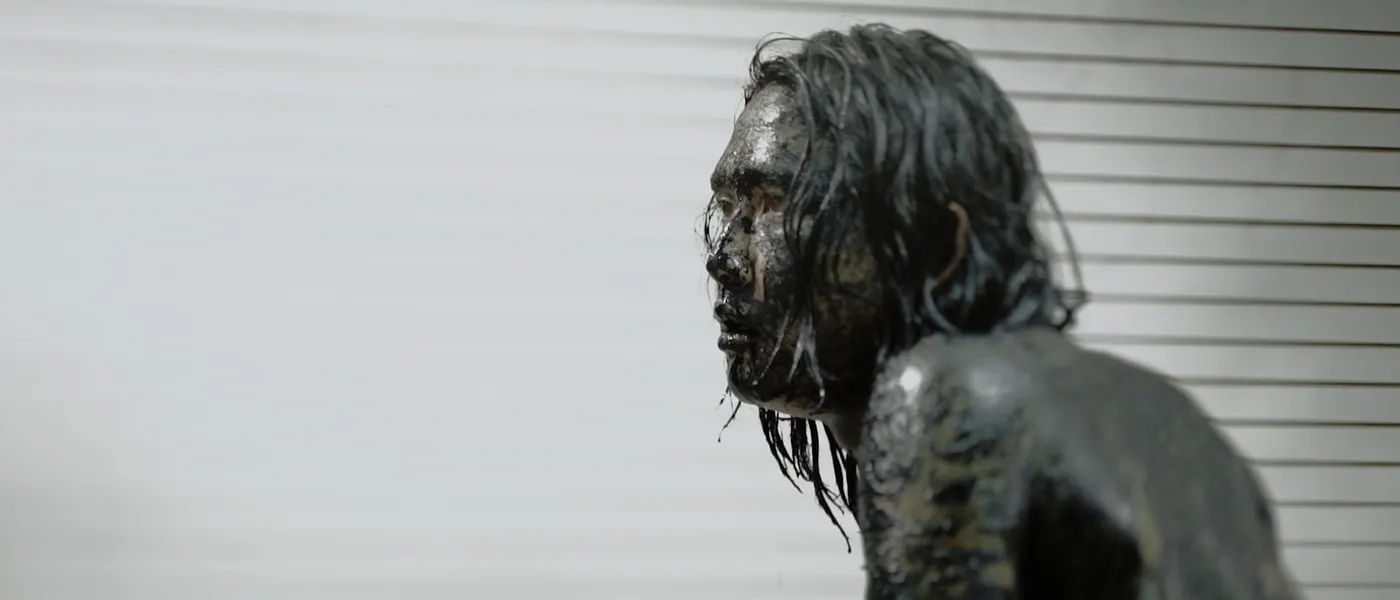
In With History in a Room Filled with People with Funny Names 4 (2017), the Naga, the cosmic tortoise, fragmented memories, histories of the Vietnam War, the New York skyline, and drones inhabited by spirits flash into a single image. What gathers them is not what they show but the intimacy of what they withhold—the dementia of memory, of history, of language itself. The image becomes a membrane: a threshold through which disparate realities, temporalities, and forms of existence enter into relation. Forms and presences move beyond the screen and into Arunanondchai’s bleached-denim paintings and spirit house sculptures, opening pathways between images and the material forms they inhabit. A spirit house, for instance, does not simply represent the spirits of the land; it shelters them, sustaining a reciprocal relation between human and more-than-human worlds. The image preserves what is absent, but it is also a dwelling for what remains.
Today, the image is in crisis. As images proliferate, mutate, and circulate, the boundary between images and reality becomes increasingly difficult to locate. Arunanondchai approaches this instability not as a loss, but as a possibility. What if an image need not correspond to reality in order to make something real? Who—or what—can belong to the common world when that boundary is unsettled?
SELECTED ARTWORK IN THE EXHIBITION
Image Carousel with 3 slides
A carousel is a rotating set of images. Use the previous and next buttons to change the displayed slide
-
Slide 1: Korakrit Arunanondchai, still from “With History in a Room Filled with People with Funny Names 4,” 2017. Single-channel video installation, HD video with sound. © Korakrit Arunanondchai; courtesy the artist; Carlos/Ishikawa, London; C L E A R I N G, New York; Bangkok CityCity Gallery, Bangkok.
-
Slide 2: Korakrit Arunanondchai, still from “With History in a Room Filled with People with Funny Names 4,” 2017. Single-channel video installation, HD video with sound. © Korakrit Arunanondchai; courtesy the artist; Carlos/Ishikawa, London; C L E A R I N G, New York; Bangkok CityCity Gallery, Bangkok.
-
Slide 3: Korakrit Arunanondchai, still from “With History in a Room Filled with People with Funny Names 4,” 2017. Single-channel video installation, HD video with sound. © Korakrit Arunanondchai; courtesy the artist; Carlos/Ishikawa, London; C L E A R I N G, New York; Bangkok CityCity Gallery, Bangkok.