
Didier William: Time Portal
Artist Didier William recalls the audio cassette tapes that his family used to communicate between Haiti and Miami during the 1990s. These tapes were filled with hours of oral recordings, which functioned as time portals, consisting of stories in which the artist’s family members in Haiti would compile an audio archive of everything that had taken place in a significant period of time. These audio cassette tapes, of which William has several boxes worth, reflect the artist's own unique family archive, upbringing, and his particular relationship to time. Time in the portal of the cassette is not fixed only in one place, but rather, constantly shifting between the artist’s family home in Miami and his place of birth in Haiti.
Didier William: Time Portal is inspired by this audio archive and shaped by temporality. It signifies the shift between time and place, and shows a multiplicity of sites and experiences that are enacted, re-enacted, or inscribed into his artwork, which is what the “time portal” refers to. Beyond the family home, and on a larger planetary scale, that shifting temporality implies the movements that have characterised the African diaspora, as well as the Africanity that is inscribed in his artwork. This exhibition, which features a large body of prints, paintings, and sculpture, is the artist’s first survey exhibition in New York City. The exhibition consists of five monumental paintings, produced between 2020 and the present, and 30 works on paper produced between 2017 and 2026. It also includes one recent sculpture made in 2025/26. The work in this exhibition is not only characterised by time, but attuned to what art historian Nadia Ellis calls the melancholy of loss in her description of the visual glare of mourning.
SELECTED ARTWORKS IN THE EXHIBITION
Image Carousel with 4 slides
A carousel is a rotating set of images. Use the previous and next buttons to change the displayed slide
-
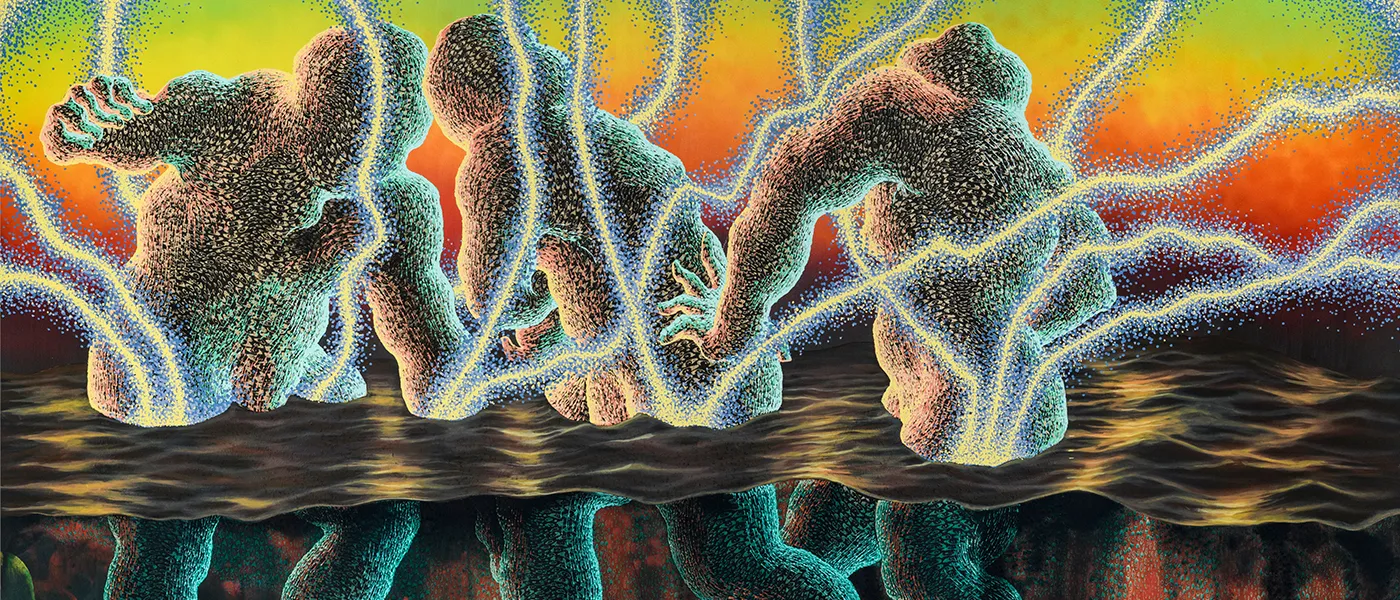
Slide 1: Didier William, "Recovery and Reconnaissance: Haiti to Miami," 2024. Acrylic, ink, wood carving on panel; 70 x 106 in. Image courtesy the artist.
-
Slide 2: Didier William, "Cursed Grounds: Blessed Bones," 2022. Aquatint, line etch, soft ground, open bite, and spit bite; 44 x 35 5/8 in. Image courtesy the artist.
-
Slide 3: Didier William, "Twaze Bronze," 2023. Screenprint; 14 x 12 in. Image courtesy the artist.
-
Slide 4: Didier William, "Cypress 2," 2024. Multi-plate etching, intaglio spit-bite on paper; 22.5 x 15 in. Image courtesy the artist.
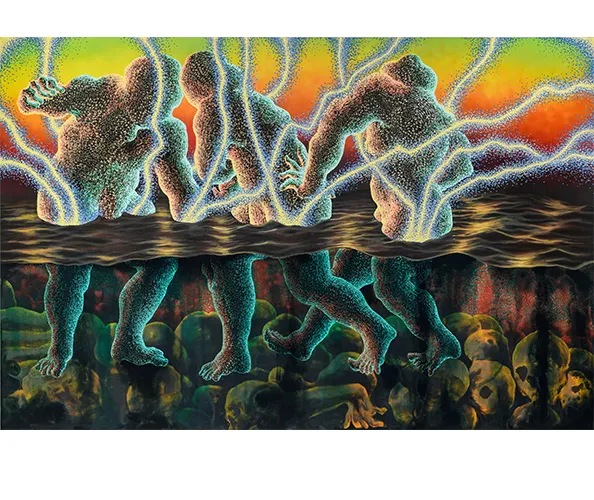
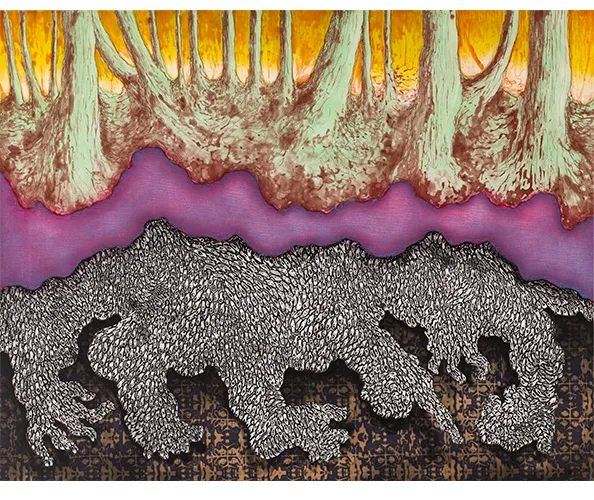
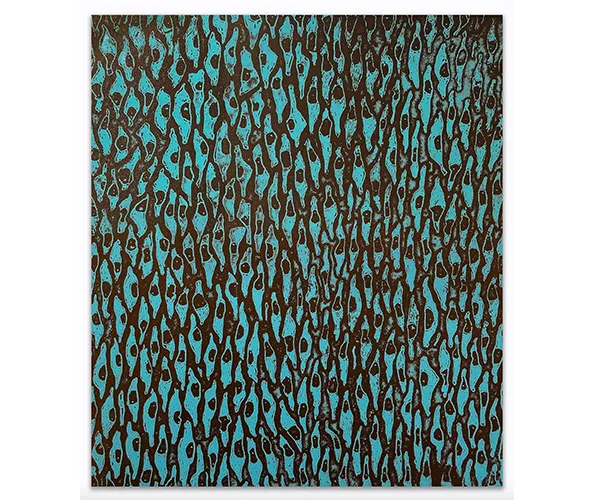
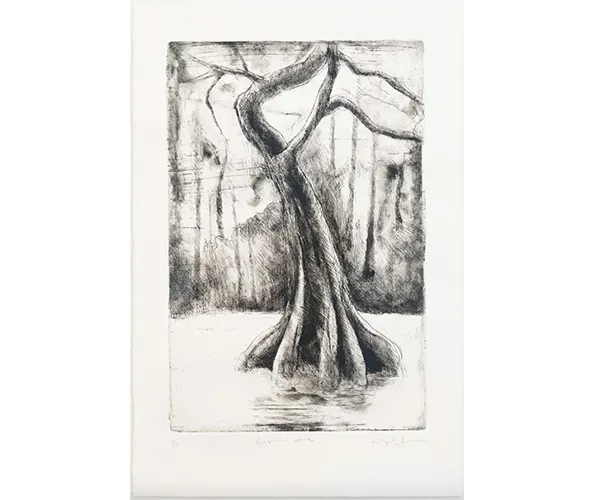
Following Ellis’s reflection on Jamaican visual artists in her emphasis on the visual elegiac form of mourning and the aesthetics of melancholy, this exhibition locates artist William as making portraiture and landscape in a mournful key. In his artworks, larger-than-life figures are situated or submerged in a space. It is a zone that art historian Anna Arabindan-Kesson calls transnational space, inspired by the “in-between” as well as the afterlives of empire and colonialism in Haiti. These bodies appear heroic and stand on top of hills, or dive into endless bodies of water. They stand on theatre stages, or wade in swamp and marshland. The landscapes are mangroves. They are trees, roots, and ecologies. The bodies move between homes and houses in Miami or Port-au-Prince neighbourhoods. This exhibition emphasises the back and forth between such tableaux, highlighting what William calls the “fictive imaginary of Haiti.”
Didier William: Time Portal builds on the cassette as an audio archive that functions as a portal between place and time. It expands on a history of Caribbean artists focusing on the allure, awe, pull, and glare in the display of brilliant visual elegiac forms of mourning. This exhibition also pushes us to reflect on the connections across the African diaspora, embodying what writer Edwidge Danticat calls, “Lòt bò dlo.” William’s art provides a critical map to grapple with the present through a careful consideration of memory, loss, time, place, and history.